
One of the most common instincts investors have with sudden wealth is to treat it like any other investible surplus, run it through the same asset allocation used for regular savings.
Rules of thumb such as putting it all into equity for the long term, or splitting it 60:40 between equity and debt, can be a reasonable starting point. But they cannot capture the complexity of where the money came from, what it is meant to fund, and what has already happened to it before it reached the bank account.
Not All Windfalls Behave the Same Way
Two investors receiving the same amount can be sitting on very different financial positions, depending on the source of the money:
| Source | Typical Tax Treatment | Liquidity | Key Consideration |
| Inheritance | Cost basis and holding period inherited from original owner | Often locked in property or family assets | Legal transfer, succession documents, sibling settlement |
| Bonus | Taxed as income at source | Fully liquid on receipt | Already post-tax; straightforward to deploy |
| ESOP / Business Sale | Capital gains and TDS may already apply | Liquid, but may be staggered via vesting | Confirm tax already paid before reinvesting the full amount |
| Overseas Remittance | Subject to remittance and reporting rules | Liquid, subject to transfer timelines | FEMA and reporting compliance before deployment |
How different sources of sudden wealth behave differently before a rupee is invested.
A Windfall Changes the Role of Your Portfolio
A windfall does not exist in isolation. What it can safely do depends on its source, its tax treatment, the investor’s existing portfolio, near-term obligations, and long-term goals.
Unlike a salary, a windfall usually arrives once. There is no next month’s paycheque to correct a mistake. This is why sudden wealth deserves more deliberate handling than routine savings, not less.
The objective shifts from “how do I deploy this quickly” to “how do I first understand this money, then integrate it into a plan that was already working.”
Managing a Windfall Is a Portfolio Construction Exercise
As the size of a windfall grows, the response it requires naturally becomes more than a single investment decision. A well-handled windfall typically moves through five stages:
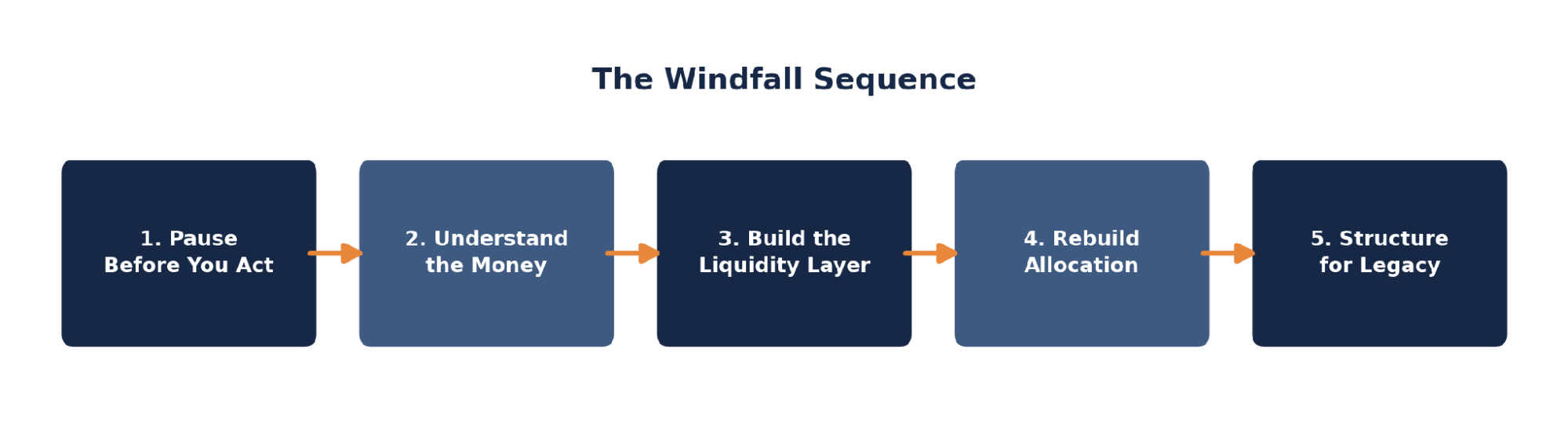 The windfall sequence – pause, understand, protect, rebuild, structure.
1. Pause Before You Act
Sudden wealth, particularly inheritance following a loss, or a large bonus after an intense work cycle – arrives during periods of emotional weight or fatigue. Committing the full amount within days is one of the most common sources of regret among investors who come into money quickly. Parking the proceeds in liquid or short-duration instruments for a few weeks costs very little and buys the time needed to think clearly.
2. Understand the Nature of the Money
An inheritance may carry cost-basis and capital gains implications tied to the original owner’s holding period. A bonus is typically already taxed as income. ESOP or business-sale proceeds may involve capital gains, TDS, or deferred tax events. Treating all of it as generic “cash to invest” without first accounting for its tax character can lead to costly decisions later.
3. Build the Liquidity and Safety Layer First
Before any long-term allocation, near-term needs deserve first claim on the money, topping up an emergency reserve, closing high-cost debt, and setting aside amounts for known upcoming obligations. Only the genuine surplus should move into long-term investment planning.
4. Rebuild Asset Allocation, Not Just Add to It
A windfall is rarely best used by simply adding it on top of an existing portfolio. It is an opportunity to step back and ask what the combined portfolio should look like going forward, and to correct existing imbalances such as concentration risk or an underweight to fixed income.
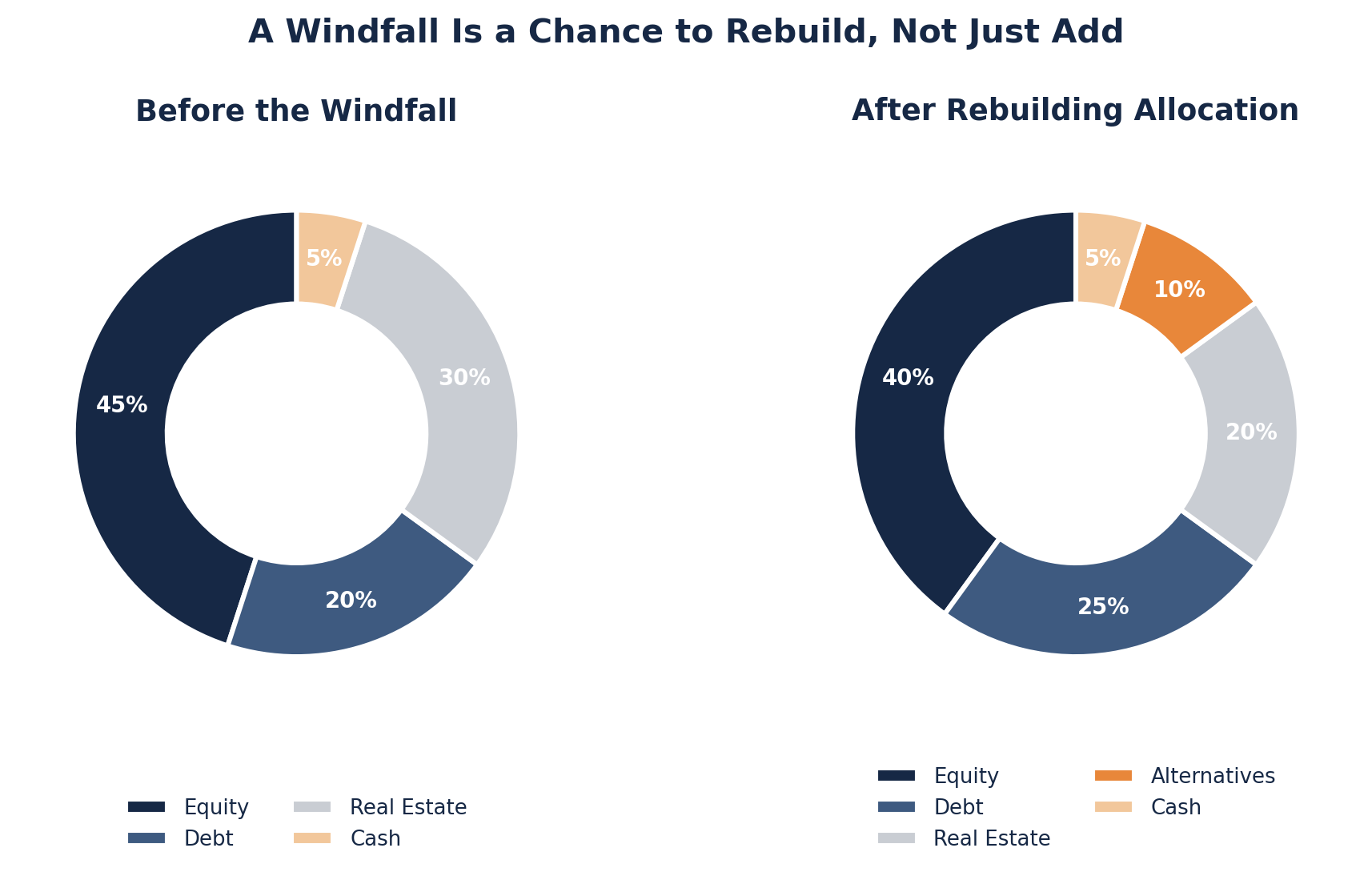 A windfall is an opportunity to rebuild allocation, not just add to what already exists.
5. Plan for Legacy and Structuring
For meaningful sums, and particularly for inherited wealth, the conversation extends beyond personal investment to how the money should be held and eventually passed on: wills, family trusts, nominations, and updated estate documentation.
The Question Worth Asking
For an investor who has just come into an inheritance, a bonus, or proceeds from a liquidity event, the instinct to act quickly is natural. But speed is rarely the constraint that matters.
The more meaningful question is not how fast the money gets invested, but whether it has been understood, protected, and integrated into a plan before it is committed anywhere.
At InCred Wealth, windfall planning begins with understanding where the money came from, what it needs to fund, and how it fits into an investor’s broader portfolio, before any allocation decision is made.