
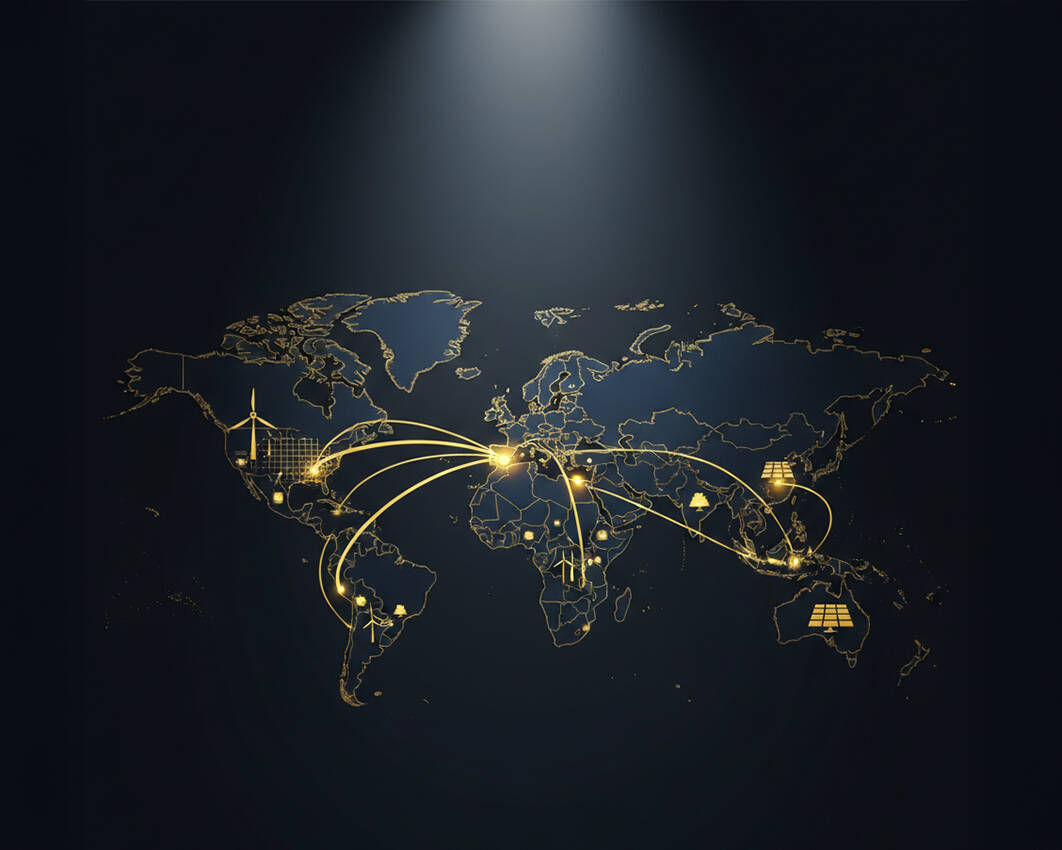
In an increasingly interconnected world shaped by global trade, digital infrastructure, and climate transformation, geography continues to exert a powerful, if evolving, influence. While technology has reduced physical distance, it has not diminished the importance of land. Instead, it has redefined what makes a landmass strategically valuable.
In the 21st century, strategic relevance is no longer determined by size or population alone. It is shaped by a convergence of resources, connectivity, climate significance, and infrastructural positioning, factors that determine how a region fits into global economic and technological systems.
Geography Still Shapes Power, But in New Ways
Historically, military defensibility or agricultural potential were the keys to land mass strategic importance, but today geography is an integral element of the supply chain, energy transition, movement and utilization of data, and climate resilience.
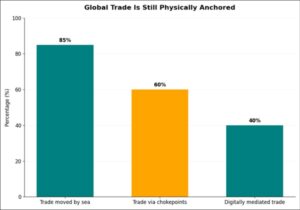
Despite advances in digitization, the utility of physical geography is still very relevant. Approximately 80% – 90% of all global trade volume is transported by sea (according to the UN Conference on Trade and Development’s Review of Maritime Transport), which is evidence of how much land masses that serve as anchors for shipping lanes, ports and other means of maritime access continues to be critical for global commerce. As a result, rather than diminish in relevance, geography has developed into an integral part of the foundational framework for a lot of the world’s commercial systems.
Natural Resources and Energy Security
One of the most enduring drivers of strategic value is resource concentration. Landmasses rich in oil, gas, freshwater, and critical minerals continue to play an outsized role in global economics.
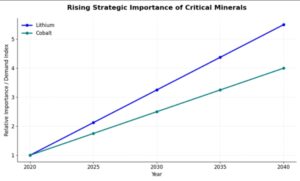
What has changed is which resources matter most. Demand for key energy-transition minerals such as lithium, cobalt, and nickel is projected to grow between three to six times by 2040, driven by electric vehicles, renewable energy systems, and battery storage (International Energy Agency, World Energy Outlook).
In parallel, over 70% of global rare-earth processing capacity is concentrated in a small number of geographies, increasing supply-chain vulnerability and elevating the strategic importance of resource-diverse landmasses (IEA, Critical Minerals Report).
Location and Access to Global Trade Routes
The geographical location of a country or region relative to the world’s key trade corridors has increasingly enhanced its value as a strategic location. While global trade volumes have continued to grow, the majority of global trade today flows through a limited number of important chokepoints, primarily straits and canals, that are responsible for over 60% of global maritime shipping (UNCTAD; International Maritime Organization).
Because of the large concentration of shipping traffic at these chokepoints, a geographical location near these shipping lanes, straits, or transcontinental gateways has substantial influence on the global economy that is not necessarily commensurate with the geographical area’s own economic size. For example, a short-term disruption at one of these key nodes can impact 10%–15% of global trade flows and demonstrate how geographic location can translate into economic power (World Bank, Global Trade Risk Assessments).
As new shipping routes, particularly in the Arctic region, are converted to being navigable during certain seasons, many regions previously on the periphery now have an opportunity to be evaluated from a strategic standpoint.
Climate and Environmental Relevance
Climate change has added a new and powerful dimension to strategic geography. Rising temperatures, melting ice, and shifting weather patterns are reshaping access to land, sea routes, and natural resources.
Emerging Arctic shipping lanes could reduce Asia–Europe transit times by 30–40% compared to traditional routes, altering long-established trade dynamics (OECD; International Maritime Organization). At the same time, climate-related disruptions already cost the global economy hundreds of billions of dollars annually, increasing the importance of landmasses tied to climate stability, freshwater access, and environmental monitoring (World Bank; IPCC).
Strategic value today increasingly includes a region’s role in climate resilience, scientific research, and long-term sustainability planning.
Digital Infrastructure and Connectivity
In a digital-first global economy, strategic landmasses are not just physical gateways, they are data gateways.
More than 95% of intercontinental data traffic travels through subsea fiber-optic cables, many of which converge at a limited number of geographic landing points (TeleGeography; International Cable Protection Committee). These locations have become critical to financial systems, cloud computing, and global digital commerce.
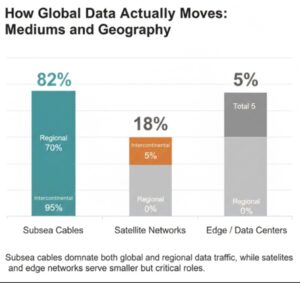
In fact, fewer than 20 major geographic corridors carry the majority of global internet traffic, reinforcing how physical geography underpins even the most virtual aspects of the modern economy (TeleGeography).
Demographics, Markets, and Economic Integration
When there is a convergence of geographic, economic, and demographic pressure, strategic value comes into play. According to the United Nations and World Bank, more than 90% globally urban growth will occur in Asia and Africa through 2035, increasing relevance for landmasses that serve as production hubs, consumption markets, logistical bridges, etc. As regions become integrated into a global value chain, studies demonstrate that these territories generally grow at a rate 2-3X greater than economic isolation, resulting in increased long-term investments in capital/infrastructure (OECD, Global Value Chains).
Strategic Value in a Multipolar World
In today’s multipolar landscape, no single factor defines strategic importance. Instead, value is created at the intersection of resources, trade access, climate relevance, and digital infrastructure.
A landmass in the 21st century is strategically valuable not merely because of where it is—but because of what it enables: energy transitions, data flows, supply-chain resilience, and climate adaptation.
As global systems become more interconnected, and more fragile, geography remains one of the most enduring forces shaping economic power and long-term global influence.
Related Posts

How the Strait of Hormuz Impacts Oil Prices and Global Markets
In today’s interconnected world, the importance of global diversification…

Digital Transformation & Technology Adoption: How It’s Transforming the Indian Wealth Management Landscape
India’s wealth management landscape is in the middle of a profound shift. What…

India-UK Free Trade Agreement: A Strategic Leap for Growth & Investment
India and the United Kingdom have signed a historic Free Trade Agreement (FTA)…

Gold vs. Silver in 2025
2025 is turning out to be quite a challenging year for most investors and fund…

RBI’s Latest Rate Cut: What It Means for Debt Investors & Borrowers
Welcome to our blog series on investing styles, in this series, we explore…

2023 A tale of resilience amidst mounting challenges
2023 has been a year of resilience, with markets and economies adapting to…
Time for Indians to Rethink the Wealth Paradigm
India is at a pivotal moment to rethink its wealth paradigm, focusing on…