
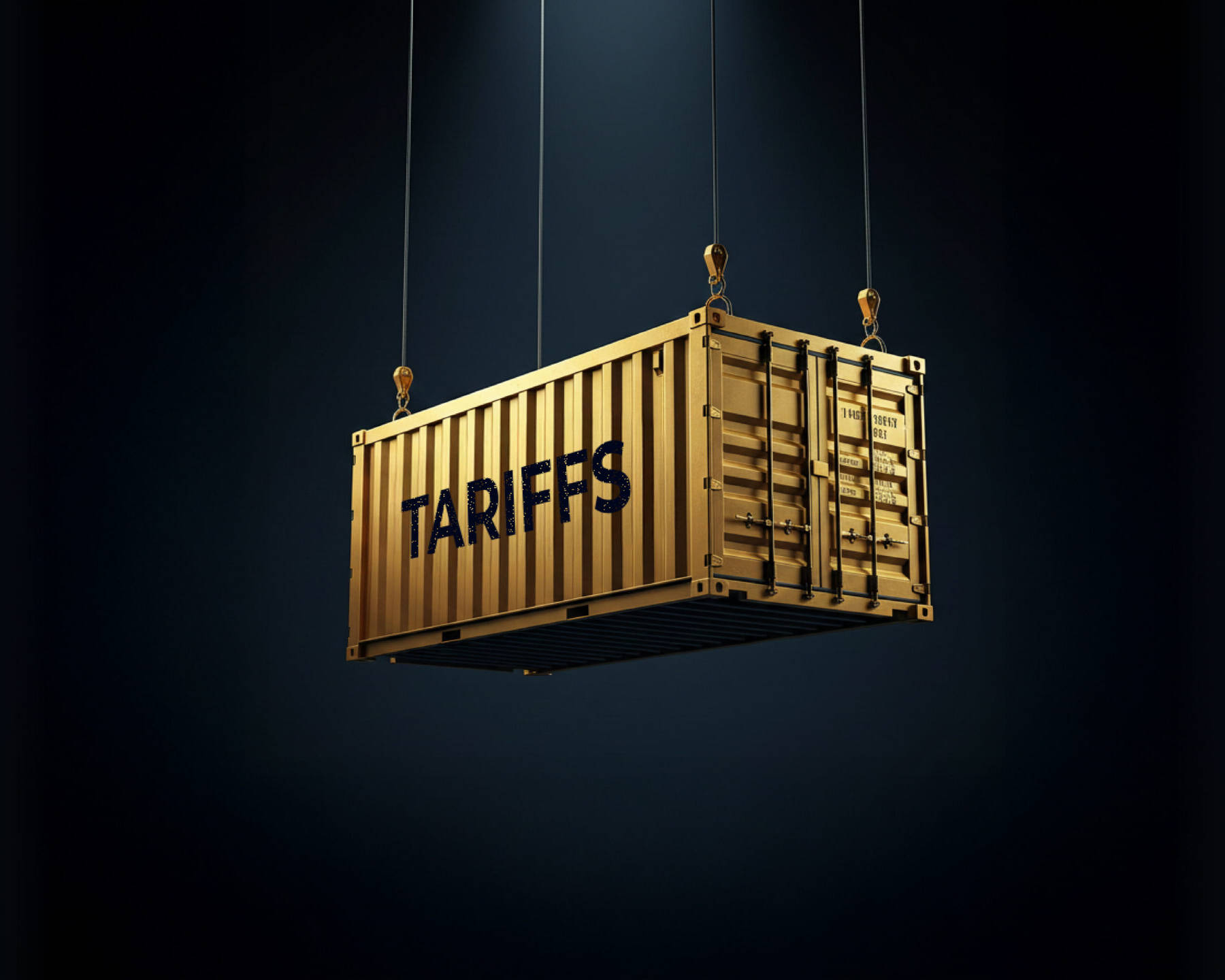
The international trading community is experiencing a rise of protectionism and an increase of economic leverage, which includes tariffs as an economic weapon. Tariffs, which once were used sparingly and with intent, have become increasingly more common and reactively employed. Tariffs have led to counter-tariffs, which have rewritten the way businesses operate around the world.
Currently, we do not see just a trade war. Rather, there has been an explosion of economic coercion, where nations utilize their economic power as part of their geopolitical arsenal. The World Trade Organization (WTO), International Monetary Fund (IMF) and regional trading groups are warning that the current trend could lead to the disintegration of global supply chains, disruption of global capital flows and increased risk to investors, businesses and consumers around the world.Many corporates have back-ended their investments and CapEx plans for lack of clarity on policies and long term implications of trading barriers.
What’s Fueling the Surge in Tariffs and Coercion
1. Trade restrictions are on the rise among developing economies.
The WTO reports that there are 169 newly-imposed trade restrictions by G20 countries between mid- October 2023 – mid-October 2024, affecting an estimated total trade of $887.7 billion. (WTO)
The total value of import restrictions currently in effect (G20) is estimated at $2,942 billion, or 11.8% of all world imports, as of mid-2024. (WTO)
Export restrictions also continue to grow in number; an estimated $276.7 billion (about the same amount) of world exports have restrictions placed on them during this time frame. (WTO)
2. The use of export controls as weapons is growing (i.e., rare earths).
In April 2025, China imposed restrictions on the export of several rare earths (samarium and yttrium) in response to the United States’ imposition of tariffs against China. (Wikipedia)
The use of export controls is not limited to only tariffs; they can also be used as non-tariff barriers in order to increase the level of leverage over a country for the purposes of technological and geopolitical power. This example from China illustrates the principle of financial coercion, i.e., when one country restricts critical exports in order to gain a strategic advantage over another country.
3. Strategic Economic Tools Beyond Tariffs – The EU’s “Trade Bazooka”
- The EU has developed an Anti-Coercion Instrument (ACI), which is currently being discussed as a potential tool to use against coercive actions taken by other countries.
- Under the ACI, the EU will have many different ways to respond to coercive action, including not only raising counter-tariffs but also using trade restrictions (including prohibitions on exports and imports), limiting foreign direct investment, and limiting the ability of companies from outside of the EU to patent new inventions.
- Thus, the potential for the EU to retaliate against coercive actions has become more institutionalized and sophisticated.
4. Macroeconomic Risk & Investor Confidence
- A European Commission analysis indicates that the impact on the U.S. economy of U.S. Tariffs rises by April 2025. In a tit-for-tat retaliation scenario, this also implies that U.S. Tariffs have a negative impact on EU GDP (Gross Domestic Product). (Economy and Finance)
- In addition to direct trade effects, there is also a decrease in investor confidence. Increased uncertainty causes tightening finance conditions which may lead to further reductions in investments and capital flows. (Economy and Finance)
- According to the IMF’s (International Monetary Fund) 2024 External Sector Report, there has been a large increase in “net harmful trade restrictions”. (International Monetary Fund – IMF)
5. Country-Level Retaliation: China vs. U.S.
- In March 2025, The Global Trade Alert (GTA) reported that China has applied duties to hundreds of items imported from the United States. Some of the tariffs imposed by China were as high as 15% on certain agricultural products (such as wheat and corn), while the majority were at 10% on many industrial goods. (Global Trade Alert)
- The Chinese government has also taken steps to prevent United States defense companies from investing in China by placing restrictions on any new projects under an “Unreliable Entity List.” (Global Trade Alert)
Why FTAs/BTAs Are Gaining Importance – And Recent Examples
As the world trades become less predictable, more and more nations are increasing the number of Free Trade Agreements (FTAs), Bilateral Trade Agreements (BTAs) to allow them to take more control over their trading partners and lessen reliance on any one partner, and to lessen their risk from the increased use of tariffs, export-control, and the use of economic coercion.
Recent Developments on Trade Agreements:
Indian Trade Agreement with EFTA – March 2024 to 2025
In March 2024, India signed an agreement with the European Free Trade Association (EFTA), which consists of Switzerland, Norway, Iceland, and Liechtenstein.
- It is anticipated that the EFTA will be a partner with India in several different industries and sectors, allowing all four countries an opportunity to invest in India.
- From the perspective of EFTA members, this will provide greater access to India, and will likely provide access to India and other EFTA members through lower costs to access India’s large consumer market and decreased supply chain costs.
United Kingdom – India Free Trade Agreement (2025)
On 6 May 2025, the United Kingdom (UK), and India signed a Comprehensive India-UK Free Trade Agreement, also known as a Comprehensive Economic and Trade Agreement (CETA) between the UK and India.
While this agreement appears to benefit the UK after the UK leaves the European Union (EU) and seeks out new trading partners, the objective of this agreement is to enhance the level of bilateral trade between India and the UK.
There are significant benefits for India’s sectors of strength in textiles and apparel; agriculture/processed foods; pharmaceuticals; and many service sectors of IT, skilled professionals, etc.
As of the early part of 2025, India is negotiating an EU Free Trade Agreement. Again, the Government of India has publicly expressed that it is seeking an EU FTA that contains “fair, balanced, and equitable trade provisions,” as well as provisions regarding safeguarding India’s sensitive sectors.
Emerging Deals: India – Eurasian Economic Union (EAEU) (2025 onward)
India began the formal negotiations for a free trade agreement (FTA) with the EAEU in 2025; EAEU includes several countries including Russia, Kazakhstan, Belarus, Armenia and Kyrgyzstan (India Briefing).
Many economists view this as a strategic move by India to diversify its trade away from Western-dominated corridors and access to Central and Eurasian markets, which are characterized by different economic dynamics, resource strengths and patterns of consumer demand (India Briefing).
The emergence of this deal between India and the EAEU is driven by a number of factors including:
- Increased protectionism and uncertainty in international trade: With trade tensions resulting in countries using high tariffs, imposing export controls and increasing geopolitical tensions, businesses can expect less predictability in international trade policy. FTAs provide a more stable, advance negotiated infrastructure to protect businesses and exporters from these sudden policy changes.
- The need to diversify the number of trading partners and supply chain sources: Countries want to reduce their vulnerability to political and economic instability by developing multiple trading partnerships and supply sources, rather than having a limited number of markets and trading partners.
- As countries become global economic players, they will use an FTA as a tool of economic diplomacy in order to balance their relationships among major powers, gain strategic partnerships, and gain alternative access to trade corridors as a means to navigating global trade tensions.
The New Dynamics of Financial Coercion
- Overall, the shifting landscape of global trade has made it clear that financial coercion is once again a major aspect of global geopolitics (including trade). Countries are no longer simply using tariffs to protect their domestic industries; they are also using tariffs as part of a larger coercive strategy when they coordinate the use of tariffs alongside other tools (e.g., exports and investments).
- Along these lines are NTBs such as export controls over critical raw materials that have historically been used as a way for countries to establish the status quo in a given region or industry.
- The ability to formalise institutional responses to actions seen as coercive is being formalised by State-level institutions such as the European Union with the European Union’s Agency for Economic and Industrial Development (ACI).
- Policy risk is becoming a significant issue for international corporations and investors, as states are increasingly using political motivations to set policy risk for corporations.
- Additionally, it is likely that the use of coercion will extend beyond trade to include financial markets by limiting foreign direct investment and freezing foreign assets in a number of ways, which may further segregate the financial markets as capital markets become affected by the use of coercion.
Looking Ahead
Tariffs, sanctions, and export controls are no longer anomalies, they are fast becoming key instruments in the toolbox of economic statecraft. As countries vie for technological dominance, control over critical supply chains, and geopolitical influence, financial coercion may well be the new normal.
For investors, especially in wealth management, this is not just a macro play, it’s a strategic imperative. Understanding and navigating this evolving terrain is essential to preserving capital, managing risk, and capturing opportunity in an increasingly fragmented global order.
Connect with InCred Wealth today and discover tailored investment opportunities that align with your goals.
Related Posts
February 20, 2026
What Makes a Landmass Strategically Valuable in the 21st Century?
In today’s interconnected world, the importance of global diversification…

December 18, 2025
Digital Transformation & Technology Adoption: How It’s Transforming the Indian Wealth Management Landscape
India’s wealth management landscape is in the middle of a profound shift. What…

October 28, 2025
India-UK Free Trade Agreement: A Strategic Leap for Growth & Investment
India and the United Kingdom have signed a historic Free Trade Agreement (FTA)…

May 26, 2025
Gold vs. Silver in 2025
2025 is turning out to be quite a challenging year for most investors and fund…

May 5, 2025
Sensex VS Wall Street
In a fascinating turn of events, the unstable global situation due to…
April 21, 2025
RBI’s Latest Rate Cut: What It Means for Debt Investors & Borrowers
Welcome to our blog series on investing styles, in this series, we explore…

December 28, 2023
2023 A tale of resilience amidst mounting challenges
2023 has been a year of resilience, with markets and economies adapting to…
December 6, 2022
Time for Indians to Rethink the Wealth Paradigm
India is at a pivotal moment to rethink its wealth paradigm, focusing on…